
Why the book still wins — especially for young learners
Thu 19th Mar 2026
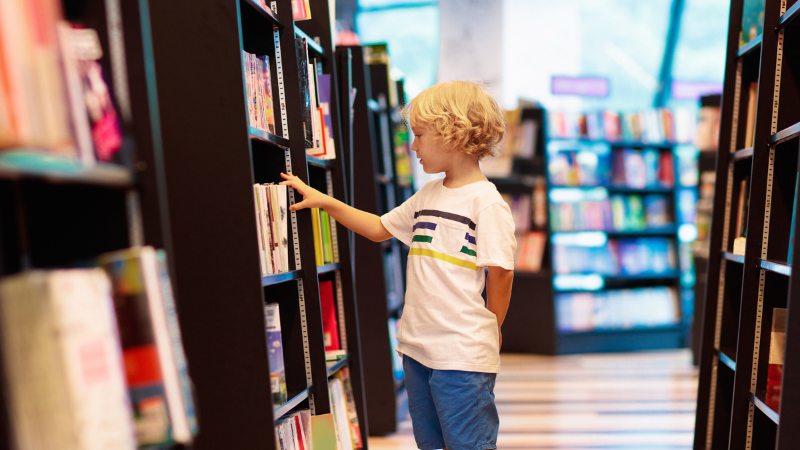
A recent piece in The Spectator by Sophie Winkleman and David James made a compelling case for printed textbooks over screens in secondary schools. We thought it was worth exploring what that evidence means for younger learners and for the parents and teachers supporting children aged 3 to 11.
Walk into most primary schools today and you will see an interactive whiteboard glowing at the front of the classroom and children who move between apps and online tasks with ease. Technology in education has an undeniable appeal: colourful, engaging, and refreshingly modern. But a growing body of research is asking a pointed question. Is all that screen time actually helping children learn?
+20 points higher — the average score advantage for children who worked on paper rather than screens in a UCL study, equivalent to around half a year's extra schooling.
That figure comes from educational researcher John Jerrim at University College London, who followed 3,000 pupils taking tests in maths, science and reading over three months. Half the group worked on paper; half worked on computers. The paper group came out significantly ahead, by the equivalent of roughly half a year of additional schooling.
For parents and carers of young children, this speaks to something many will recognise: that there is something different, something more settled, about learning from a book.
What is happening to reading in the UK
The National Literacy Trust has been tracking children's reading habits since 2005. Its most recent findings are striking. In 2024, just one in three children and young people aged 8 to 18 said they enjoyed reading in their free time, the lowest level recorded in 19 years.
Reading enjoyment and reading skill are closely linked. Children who enjoy reading show measurably higher scores than those who do not. Anything that erodes that relationship has real consequences, and the evidence increasingly points to screen time as a significant factor.
The case for print in the primary years
Young children are still building their capacity for sustained attention. Every time a child sits with a workbook or a reading book, turns a page and follows a line of print with their finger, they are practising something screens quietly undermine: focus. A physical book has a beginning, a middle and an end. It does not ping. It does not offer a more exciting option one swipe away. It simply asks a child to be present with the task in front of them.
The research supports this. A major study drawing on data from around 470,000 participants across more than three dozen countries found that at primary school age, children who read more in print consistently showed stronger comprehension than those who read more on screen. Crucially, this pattern was most pronounced in the primary years, making the format question particularly relevant for younger children.
There is also the matter of physical wellbeing. Screens are associated with eye strain, disrupted sleep and increased restlessness. A well-designed printed resource carries none of those risks. It can be used at a kitchen table, tucked into a bag, written in, and returned to. It is calm, contained, and entirely in the child's control.
What this means for parents and teachers
None of this means technology has no place in primary education. Used thoughtfully and sparingly, it absolutely does. But for the core work of learning: reading carefully, practising maths, building knowledge step by step, a good, printed book remains the most reliable tool we have.
At Schofield & Sims, we have believed this for over a century. It is why our workbooks are designed with care: structured, progressive and free from distraction. Not because we are resistant to change, but because we take the research seriously and because every child deserves a resource that gives them the best possible chance to succeed.